Planning
529 Plans vs Coverdell ESAs: How the Two Education Savings Accounts Differ and What Families Weigh
The short answer
A 529 plan and a Coverdell ESA are both tax-advantaged education savings accounts. They differ in contribution limits, income rules, investment choices, and permitted uses. A 529 has no federal income limit for contributors, while a Coverdell caps contributions at $2,000 per beneficiary each year and phases out with income. Which fits depends on the household.
What are a 529 plan and a Coverdell ESA?
A 529 plan, legally called a qualified tuition program, is a plan operated by a state or an educational institution that offers tax advantages for saving toward post-secondary education and, for a designated beneficiary, toward tuition at an elementary or secondary school. Source: IRS, 529 Plans: Questions and answers, as of November 23, 2026. States can offer prepaid tuition plans and savings plans, and the Texas Comptroller describes Texas as having three 529 plans: one prepaid tuition plan and two college savings plans. Source: Texas Comptroller, Texas 529 plans, updated May 2026.
A Coverdell education savings account is a trust or custodial account set up in the United States solely to pay qualified education expenses of the designated beneficiary. The IRS states that the benefit applies to qualified elementary and secondary expenses as well as higher education expenses, and that the beneficiary must be under age 18 when the account is established unless the beneficiary is a special needs beneficiary. Source: IRS, Topic no. 310, as of November 23, 2026.
The commonly cited 529 benefits, and the Coverdell benefits, share the same trade-off. The IRS states that contributions to either account are not deductible, and the tax benefit applies only when money is used for qualified education expenses. Source: IRS, Topic no. 313 and IRS Topic no. 310, as of November 23, 2026. This article describes federal rules and general features. It does not recommend a plan, a custodian, or a contribution amount.
529 vs Coverdell ESA: what are the contribution limits and income rules?
For a 529 plan, the IRS states that there are no income restrictions on the contributor or the beneficiary, and no limit on the number of plans a person can set up. Contributions cannot exceed the amount necessary to provide for the beneficiary's qualified education expenses, and each plan sets its own contribution limit, so the plan's administrator is the source for that figure. Source: IRS, 529 Plans: Questions and answers and IRS, Topic no. 313, as of November 23, 2026. The IRS also notes that gift tax consequences may arise if contributions plus other gifts to one beneficiary exceed $19,000 in a year, and that a special rule for 529 contributions is described in the Form 709 instructions.
For a Coverdell ESA, the IRS states that total contributions for a beneficiary in any year cannot exceed $2,000, no matter how many Coverdell accounts exist. Source: IRS, Topic no. 310, as of November 23, 2026. Publication 970 (2025 edition) states that the limit is gradually reduced when the contributor's modified adjusted gross income is between $95,000 and $110,000 ($190,000 to $220,000 on a joint return), and that an individual cannot contribute at $110,000 or more ($220,000 or more on a joint return). Source: IRS, Publication 970, as of November 23, 2026. Confirm the current figures with the IRS before relying on them.
Other Coverdell rules can limit the benefit. Contributions must be made in cash, generally before the beneficiary reaches age 18 (unless the beneficiary is a special needs beneficiary), and by the due date of the contributor's tax return, not including extensions. Organizations can contribute regardless of income. The IRS also states that a beneficiary may owe a 6% excise tax each year on excess contributions that remain in the account at the end of the year. Sources: IRS Topic no. 310 and Publication 970, as of November 23, 2026.
The table below summarizes the federal points described in this section and the next sections. It is a general comparison, not a recommendation, and plan-level rules vary.
| Feature | 529 plan | Coverdell ESA |
|---|---|---|
| Annual contribution cap | Set by each plan; cannot exceed what the beneficiary's qualified expenses require | $2,000 total per beneficiary per year across all Coverdell ESAs |
| Contributor income rules | No income restriction on the contributor or beneficiary | Limit phases out at modified AGI of $95,000 to $110,000 (single) or $190,000 to $220,000 (joint); no individual contribution at $110,000 or $220,000 and above |
| K-12 use | Up to $20,000 per year per beneficiary across all 529 programs | Qualified elementary and secondary expenses count under Coverdell rules; funding is limited by the $2,000 cap |
| Timing rules | Account open at least 15 years for the special Roth rollover | Contributions generally stop at age 18; balance generally distributed within 30 days after age 30, unless special needs |
| Deductibility | Contributions are not deductible | Contributions are not deductible |
| Unused funds | Change the beneficiary within the family, use the limited Roth rollover, or take a distribution with taxable earnings and generally a 10% additional tax | Roll over to an eligible family member under 30, or take a distribution with taxable earnings and generally a 10% additional tax |
Which expenses qualify, including K-12 costs?
For a 529 plan, the IRS states that qualified expenses generally include costs required for enrollment or attendance at a college, university, vocational school, or other eligible post-secondary institution. For a student at a public, private, or religious elementary or secondary school, the IRS lists tuition; curriculum and curricular materials; books and other instructional materials; tuition for tutoring or educational classes outside the home; fees for certain standardized, advanced placement, and admissions tests; dual enrollment fees; and educational therapies for students with disabilities. Those K-12 expenses are limited to $20,000 per year ($10,000 before December 31, 2025) across all of the beneficiary's 529 programs. Source: IRS, Topic no. 313, as of November 23, 2026.
The IRS also states that a qualified 529 distribution can include computer technology, related equipment, and internet access used by the beneficiary during enrollment at an eligible institution, and room and board at an eligible institution. Source: IRS, 529 Plans: Questions and answers, as of November 23, 2026. Whether a specific cost qualifies depends on the school, the beneficiary's enrollment, and the account's rules.
For a Coverdell ESA, the IRS states that the benefit covers qualified elementary and secondary education expenses in addition to higher education expenses. Source: IRS, Topic no. 310, as of November 23, 2026. The specific cost categories are defined in IRS Publication 970, and the 529 and Coverdell lists are not identical, so a family should review the current definitions or ask a tax professional before relying on either list. Because Coverdell contributions are capped at $2,000 a year, the account may fund only part of a school's costs.
For either account, the IRS states that distributions are tax-free only to the extent they do not exceed the beneficiary's qualified education expenses, and that Form 1099-Q reports distributions. The same expense generally cannot be counted for more than one education tax benefit, so records matter. Sources: IRS Topics no. 310 and 313, and Publication 970, as of November 23, 2026.
How much investment flexibility and control do families have?
A 529 prepaid tuition plan lets families pre-pay all or part of in-state public college costs, while with a 529 college savings plan the account holder selects an investment option when opening the account. The Texas Comptroller states that growth in these accounts is not guaranteed and account holders may lose money, including principal. Source: Texas Comptroller, Texas 529 plans, updated May 2026.
The IRS states that whoever sets up a 529 plan is the custodian and controls the funds until they are withdrawn, that the beneficiary can be changed to another member of the family without tax consequences, and that a family is not restricted to its own state's plan, although each plan has its own features. Source: IRS, 529 Plans: Questions and answers, as of November 23, 2026.
A Coverdell ESA must be held by a bank or another entity approved by the IRS as trustee or custodian. Source: IRS, Publication 970, as of November 23, 2026. Investment choices therefore depend on the custodian a family selects, and they can be broader or narrower than a given 529 plan's menu. Comparing each account's disclosure documents for investment options, fees, and restrictions is a reasonable step. More choice also means more decisions, and neither account is designed to remove investment risk. The investment planning page describes how the firm approaches those questions.
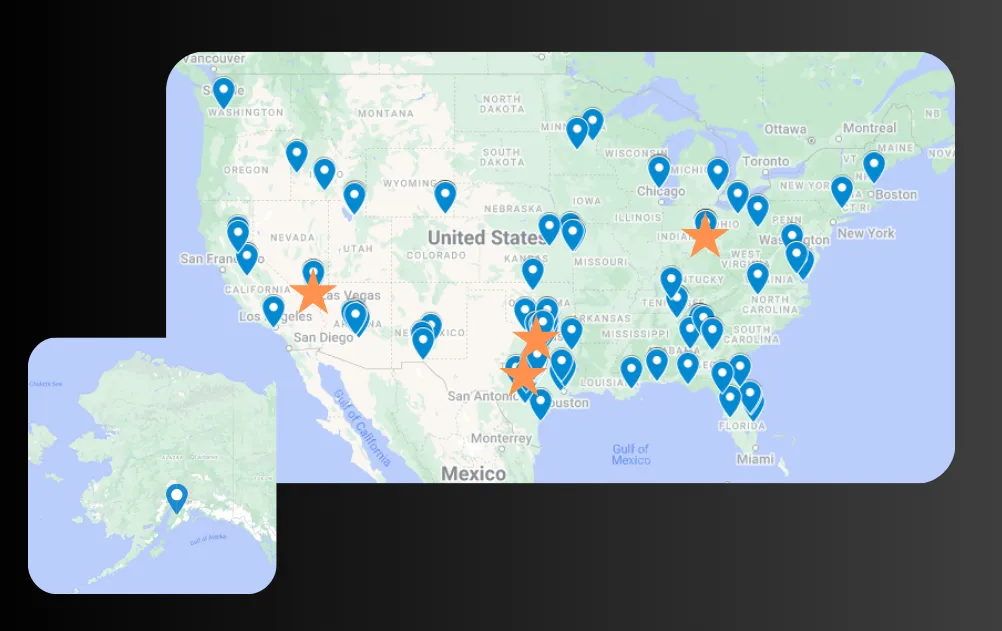
State tax treatment differs by state. The Texas Comptroller notes that Texas does not have a state income tax, but that in states that do, tax consequences vary and could include the recapture of state tax deductions as well as penalties. Source: Texas Comptroller, Texas 529 plans, updated May 2026. Ankerstar Wealth also serves clients in Nevada and Ohio. Households in those states, or in any other state, should confirm how their own state treats 529 contributions and withdrawals with the plan administrator or a tax professional before relying on a general statement.
How do these accounts affect financial aid?
Federal Student Aid states that on the FAFSA form, accounts designated for a student's benefit, including Coverdell savings accounts and 529 college savings plans, are reported as investments. The account must be reported as an asset of the parent if the student is considered a dependent, and as an asset of the student if the student is considered independent. The value of education savings accounts held for the parent's other children is not included. Source: Federal Student Aid, Current Net Worth of Investments, as of November 23, 2026.
How an account affects aid eligibility depends on the aid formula in use, the account's value, who owns it, and the school. Some colleges and private schools collect additional information for their own aid decisions, so the school's financial aid office is the source for how it treats these accounts. This article cannot predict whether saving in either account would raise or lower any particular family's aid.
When must a Coverdell ESA be used, and what happens if the child does not use the funds?
For a Coverdell ESA, the IRS states that amounts remaining in the account must be distributed within 30 days after the beneficiary reaches age 30, unless the beneficiary is a special needs beneficiary. If the beneficiary dies before age 30, the remaining amounts must be distributed within 30 days after the date of death. Certain transfers to members of the beneficiary's family are permitted. Source: IRS, Topic no. 310, as of November 23, 2026.
Publication 970 states that a Coverdell distribution can be rolled over tax-free to another Coverdell ESA for the same beneficiary or for an eligible family member who is under age 30, generally within 60 days. If a distribution exceeds the beneficiary's qualified expenses, the earnings portion of the excess may be taxable, and a 10% additional tax generally applies to the taxable amount, with exceptions. Source: IRS, Publication 970, as of November 23, 2026.
For a 529 plan, the IRS states that if a distribution is greater than the beneficiary's qualified expenses, a portion of the earnings is taxable. Source: IRS, Topic no. 313, as of November 23, 2026. Publication 970 describes a 10% additional tax that generally applies to the taxable amount, with exceptions, including amounts included in income because the beneficiary received a tax-free scholarship. Changing the beneficiary to another member of the family has no tax consequences, according to the IRS (529 Plans: Questions and answers, as of November 23, 2026).
Congress also created a special rollover from a 529 account to the beneficiary's Roth IRA. For it to be tax-free, the IRS states that the rollover must be a direct trustee-to-trustee transfer, is subject to the Roth IRA annual contribution limit and a $35,000 lifetime limit, must come from an account open at least 15 years, and may not exceed the amount contributed (and attributable earnings) before the five-year period ending on the distribution date. Source: IRS, Topic no. 313, as of November 23, 2026. This is a narrow option rather than a general exit, and it moves money in over several years because of the annual limit.
Neither account promises that its balance will match actual education costs. A CPA or attorney the firm works with can review how these distribution rules apply to a specific household.
How does education funding compete with retirement funding for households with older children?
Households with teenagers often face college costs while they are also in the final years of retirement saving. Dollars directed to a 529 plan or a Coverdell ESA are not available for retirement contributions, cash reserves, or debt reduction, and the reverse is also true. Which goal should receive priority depends on income, years to retirement, the number of children, expected school costs, and aid eligibility. The education planning page describes how the firm frames education funding, and the retirement planning page describes how the retirement side is reviewed. The family financial planning guide shows how these goals sit alongside reserves, protection, and estate documents.
Some features connect the two goals. The special 529 to Roth IRA rollover described above may allow a limited amount of leftover education savings to move toward the beneficiary's own retirement, but it is capped, has holding-period rules, and does not fund the parents' retirement. Households that are weighing retirement targets can also read the retirement planning goals guide. Funding education beyond what a child ends up using may leave less for other goals, while education costs may be partly met through aid, scholarships, or other sources. How much that matters depends on the household and its circumstances.
A 10-point 529 and Coverdell checklist
1. List the child's age, the expected timing of school costs, and whether K-12 expenses may be part of the picture.
2. Check whether your modified adjusted gross income falls inside the Coverdell phase-out range for your filing status.
3. Ask each 529 plan for its contribution limit, fees, and investment options in writing.
4. Compare the investment menu and fees of any Coverdell custodian with the 529 plan menus you are reviewing.
5. Review which K-12 and higher education expenses qualify under each account's rules and keep receipts.
6. Confirm who owns each account, who the beneficiary is, and how a beneficiary change would work.
7. Check how each account would be reported on the FAFSA and ask each school about its own aid forms.
8. Review your state's tax treatment of contributions and withdrawals with the plan administrator or a tax professional.
9. Write down what you would do with unused funds, including a beneficiary change, the age 30 Coverdell rule, or the limited Roth rollover.
10. Compare education savings with retirement contributions, cash reserves, and debt before choosing an amount.
This checklist is educational. It does not decide what is appropriate for any household, and results depend on individual circumstances and current law.
Next steps and related planning resources
If these questions point to a planning topic, the education planning page describes how Ankerstar Wealth approaches education funding alongside retirement, tax, and estate questions, and the calculators page offers estimation aids that depend on the inputs entered. You are welcome to request a conversation about education funding by making an inquiry through the contact page.
The opinions expressed here are those of the advisor and are not personal financial, tax, or legal advice. Tax rules, limits, and thresholds change, and results vary by household. Consult a qualified tax professional or attorney before acting.
This article is general information, not personalized investment, tax, or legal advice. Your situation is specific to you — talk to a qualified professional before acting on anything here.
Frequently asked questions
Is a 529 better than a savings account for a child?
It depends on the goal. The IRS states that 529 earnings are not subject to federal tax when used for qualified education expenses, and that contributions are not deductible. The trade-offs are that a 529 savings plan invests in options that can lose value, and earnings withdrawn for non-qualified purposes may be taxable with an additional 10% tax. A regular savings account has fewer use restrictions, but its interest is generally taxable. Which fits depends on the time horizon and how certain the use of the funds is (IRS and Texas Comptroller, as of November 23, 2026).
Why would someone choose a Coverdell ESA over a 529?
Some households consider a Coverdell for the account structure, for the investment choices a custodian offers, or because the IRS states it covers qualified elementary and secondary expenses. The trade-offs are the $2,000 annual cap per beneficiary, income phase-outs for contributors, contribution age limits, and the age 30 distribution rule. Because the 529 K-12 rules were expanded for 2026, the overlap between the two accounts may be larger than before (IRS, as of November 23, 2026).
When must a Coverdell ESA be used?
The IRS states that amounts remaining in a Coverdell ESA must be distributed within 30 days after the beneficiary reaches age 30, unless the beneficiary is a special needs beneficiary. Before then, certain transfers to members of the beneficiary's family are permitted. A distribution larger than qualified education expenses may have taxable earnings (IRS, as of November 23, 2026).
What happens to a Coverdell if the child does not go to college?
Publication 970 states that the balance can be rolled over tax-free to another Coverdell ESA for the same beneficiary or an eligible family member under age 30, generally within 60 days. Otherwise, a distribution above qualified expenses may have taxable earnings and generally a 10% additional tax, with exceptions. The account may also be used for qualified expenses other than college, such as eligible elementary and secondary costs (IRS, as of November 23, 2026).
Can 529 funds be used for private school before college?
Yes, within limits. The IRS states that 529 distributions can cover certain expenses for a public, private, or religious elementary or secondary school, up to $20,000 per year per beneficiary across all of the beneficiary's 529 programs ($10,000 before December 31, 2025). Eligible categories include tuition, curriculum, books, certain tutoring, and certain test fees. State tax treatment may differ (IRS and Texas Comptroller, as of November 23, 2026).